
Your DIY SuiteDash Setup Is an Expensive Hobby
Your DIY SuiteDash setup is a disorganized mess. This is why treating a powerful platform like a simple app is more damaging than the old system you left behind.
You made the right call. Your business was straining the limits of simpler tools like HoneyBook or Dubsado. You needed more power, more customization, and a single source of truth for your clients and projects. So you invested in an all-in-one platform like SuiteDash.
That was your first correct decision. Your second decision, however, is now costing you time, money, and your team's sanity.
You decided to set it up yourself.
Now, months later, that powerful platform is a digital ghost town. It’s a messy collection of half-built automations, confusing client portals, and workflows that go nowhere. Your team avoids it, reverting to old spreadsheets and a patchwork of other apps. The system you bought to create efficiency has become a monument to expensive frustration. You treated enterprise-grade software like a plug-and-play app, and it has failed completely.
The Logic of DIY and the Inevitable Crash
Let’s be clear: you’re a capable founder. You built a business that’s pushing past $500k. The impulse to DIY the implementation is understandable. You want to understand the nuts and bolts of your own business, and you’re conscious of expenses. You look at the feature list, watch a few tutorials, and think, "I can figure this out."
But a platform like SuiteDash isn't like its simpler predecessors. HoneyBook and Dubsado are designed with rigid guardrails for a reason. They sacrifice customization for ease of use. They give you a paved path. SuiteDash, and similar platforms like GoHighLevel, give you a plot of land and a truck full of construction materials. Without an architectural blueprint, you’re just making a pile.
The crash comes quietly at first. You build a client onboarding automation, but it doesn't properly trigger the project setup in another module. You create a custom dashboard for clients, but forget to assign the right permissions, so they see nothing. Your team member can't find the invoice template you “know” you created, so they just make one in a Google Doc. Each small failure erodes trust in the system until no one uses it at all.
A Broken Power Tool Is Worse Than a Simple One
The biggest mistake founders make is believing that a poorly implemented powerful system is still better than the simple system they outgrew. It is not. A confusing, unreliable system is actively damaging. It creates more work, introduces errors, and makes your company look unprofessional.
Your old, simple system, despite its limitations, was predictable. Your team knew how it worked. Your clients had a consistent experience. A broken DIY SuiteDash setup offers only chaos. It promises a streamlined future but delivers a dysfunctional present.
Here’s how that functional gap plays out in practice:
| Feature | Simple Tool (e.g., Dubsado) | DIY Power Tool (e.g., SuiteDash) | Expert-Led Power Tool (e.g., SuiteDash) | |---|---|---|---| | Client Onboarding | A linear, unchangeable sequence of forms and contracts. Reliable but inflexible. | A tangled web of triggers and automations that fail silently. Clients get duplicate emails or none at all. | A strategic, conditional workflow that adapts to client type. All data is captured and routed correctly to the right team members and projects. | | Invoicing | Simple, branded invoices sent automatically. Limited payment gateway options. | Invoices are generated but not linked to projects. Reminders fail to send. Payment data isn't tracked properly. | A fully automated invoicing system tied to project milestones. Integrates with your accounting software and provides clear financial dashboards. | | Project Management | A basic task list. Not robust enough for complex service delivery. | Tasks are created but not assigned. Templates are half-finished. Your team still uses ClickUp because the PM functions are unusable. | A centralized project hub with custom templates, automated task assignments based on project phase, and clear visibility for your team and clients. | | Client Communication | A single, chronological feed of messages. Functional but basic. | Clients are confused. Some messages are in the portal, some are in email. No one knows where to look. Files are lost. | A secure, centralized messaging system. All communication is tied to the specific client and project, creating a permanent, organized record. |
Your DIY setup sits in that middle column, causing active harm. It’s a liability, not an asset.
The Common Failure Points of DIY Platform Implementation
Your system isn’t a mess because you’re not smart. It’s a mess because you fell into the common traps of DIY implementation. These are the issues we see constantly when taking over and rebuilding failed setups.
H3: Building Tasks, Not Systems
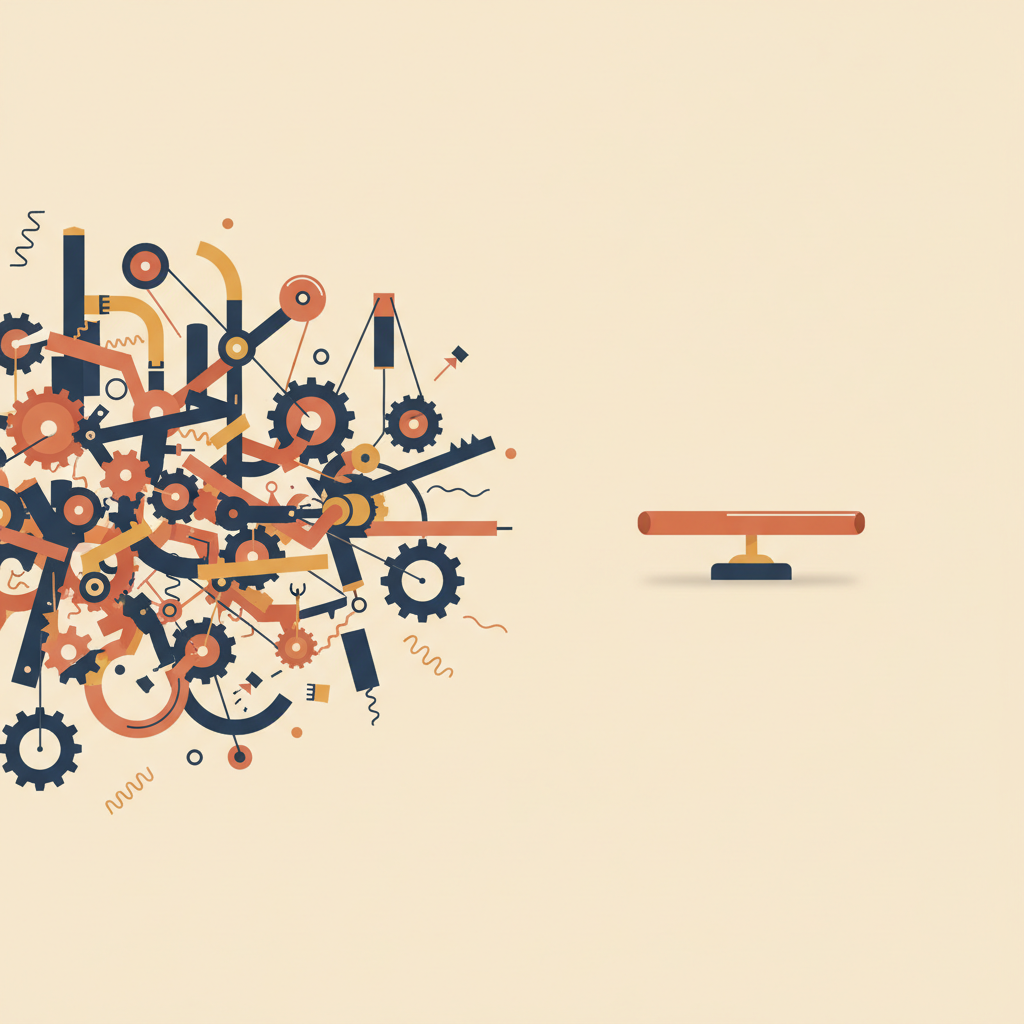
You focused on automating individual tasks. You created a form that triggers an email. You made a template for a proposal. What you failed to do was connect those tasks into a cohesive, end-to-end system. Your business doesn't run on tasks; it runs on comprehensive workflows like lead-to-close or project-kickoff-to-completion. Without a top-down strategy, you just have a box of disconnected cogs.
H3: The "Set It and Forget It" Myth
You treated the implementation as a one-time project. You built it (or part of it) and expected it to run forever. But your business evolves. You add new services, refine your processes, and change your team structure. A powerful platform needs to evolve with you. An expert-led approach includes plans for ongoing maintenance, iteration, and improvement, which is a core part of strategic operations. Without it, your system becomes obsolete the moment your business changes.
H3: Ignoring Team Adoption and Training
You built the system in a vacuum, based on how you think things should work. You never consulted your team or, worse, you just gave them a login and expected them to figure it out. Adoption isn't automatic. It requires documentation (we call it a Company Playbook), hands-on training, and a feedback loop. When the team doesn’t understand the why behind the system or the how of using it, they will always revert to what's familiar.
H3: Drowning in Feature Overload
SuiteDash can do almost anything. That’s its strength and its biggest danger. When you logged in, you saw endless possibilities: LMS, Events, complex conditional automations, custom dashboards. Paralyzed by choice and overwhelmed by the potential, you dabbled in everything but completed nothing. You tried to build the most complex version of your system first, instead of starting with a Minimum Viable System and iterating from there.
From Platform Purchase to Business Profit
An investment in a platform like SuiteDash only begins to pay dividends when it is strategically implemented. This is where a certified expert becomes a non-negotiable part of the process.
As a certified SuiteDash Sensei, we don't just connect features. We serve as your strategic systems setup partner. We start with your business goals, your service delivery model, and your client experience. We design the architectural blueprint before a single automation is built. We map your entire process, identify the friction points, and then configure the platform to solve for them.
Our role is to bridge the gap between the platform's potential and your business's reality. We handle the technical build-out, but more importantly, we lead the strategic thinking. We ensure the system serves your team, not the other way around. We build the Playbook, train your people, and make sure the platform is adopted and used correctly.
This isn’t just about getting your SuiteDash system working. It's about freeing you from the weeds of technical configuration so you can focus on high-value activities like sales, service delivery, or strategic growth—the work of a founder or CEO, not a systems admin. This is the path from an expensive hobby to a true operational asset.
Your DIY setup is a sunk cost and a current liability. Stop trying to fix the unfixable. It's time to partner with an expert who can turn your powerful software investment into a powerful engine for your business. Let's talk about a rescue and rebuild. Contact us today to schedule a consultation.
SuiteDash · systems · operations · automation · DIY failure