

You're the CEO, Not the COO. Stop Trying to Be Both.
You're the visionary CEO, but you're stuck in the weeds of daily operations. This role conflict is the main reason your service business isn't scaling.
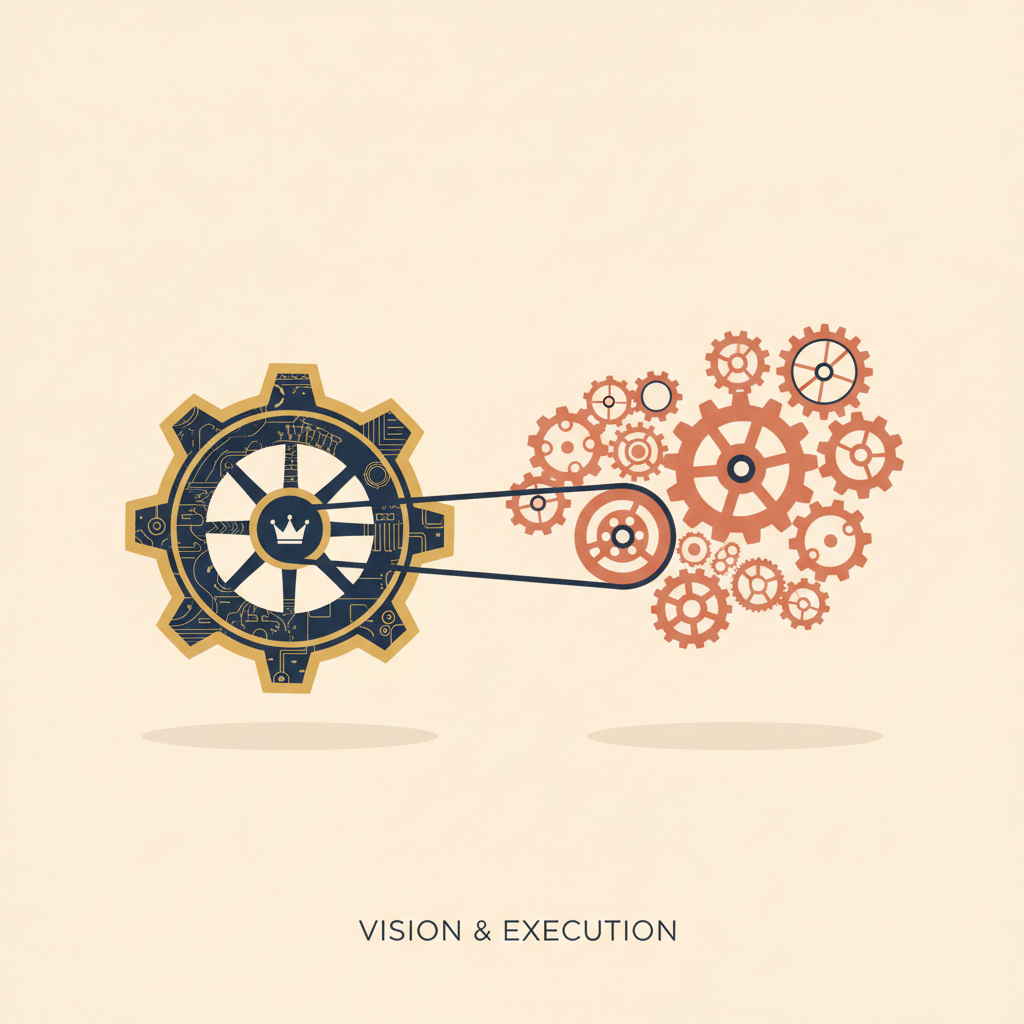
You started your business with a vision. A better way to serve clients, a unique approach, a gap in the market you knew you could fill. You were the visionary, the strategist, the CEO.
But somewhere between your first client and your first million in revenue, another job title crept onto your desk: Chief Operating Officer. Now you spend your days approving invoices, managing project timelines, troubleshooting software, and answering an endless stream of team questions. The vision is collecting dust while you’re buried in the daily grind.
Let’s be direct: this role conflict is the single biggest obstacle preventing your service business from scaling past the $5M mark. You’re the CEO, not the COO. It’s time to stop trying to be both.
The CEO vs. The COO: A Tale of Two Roles
Founders of growing businesses naturally wear many hats. But the CEO and COO hats are fundamentally different. Trying to wear both means you do neither job well. The CEO is the Visionary, focused on the future. The COO is the Integrator, focused on the present.
The CEO decides where the ship is going. The COO makes sure the engines are running, the crew is organized, and the ship actually gets there.
Here’s how the roles break down:
| Dimension | CEO (Visionary) | COO (Integrator) | |---|---|---| | Primary Focus | Vision, Strategy, Culture | Execution, Process, People | | Time Horizon | 1-5 Years Out | This Quarter, This Month, This Week | | Key Question | "What should we do and why?" | "How will we get it done and who will do it?" | | Primary Metrics | Revenue Growth, Market Share, Profitability | Team Utilization, Project Margin, Client Satisfaction |
As the CEO, your job is to create the game plan. The COO’s job is to execute it, play by play. When you’re stuck doing both, you’re constantly pulled from the 30,000-foot view to ground level, and the whiplash is damaging the business.
Four Signs You're a CEO Trapped in the COO's Job
This isn't just a theoretical problem. The conflict shows up as real, painful symptoms in your business. See if these sound familiar.
1. Strategic Drift and Stagnation
You have a three-year plan, but you haven't looked at it in six months. You want to explore a new service offering, but you can't find a spare afternoon to think it through. While you’re busy approving a social media post or debugging a workflow in SuiteDash, your competitors are launching new initiatives.
When the CEO is mired in operations, the business loses its strategic momentum. You stop innovating and start maintaining. The company plateaus because its leader is too busy with tasks that should be delegated.
2. Team Frustration and Bottlenecks
Is your name the primary dependency on every major project in ClickUp? If your team can’t move forward on client work, internal projects, or hiring without your direct sign-off, you are the bottleneck.
This creates massive frustration. Your best people feel micromanaged and disempowered. They either wait for you, slowing everything down, or they try to move forward and make mistakes because the process isn't clear. Morale plummets and momentum dies.
3. Operational Chaos
Your tech stack is a patchwork of disconnected tools. You might use HoneyBook or Dubsado for proposals and onboarding, but project delivery happens in a messy spreadsheet, and financial tracking is in another system entirely. Nothing talks to each other.
Client experiences are inconsistent. One client gets a stellar onboarding while the next one falls through the cracks. Profitability on projects is a mystery. You lack a single source of truth for business performance. This chaos is the direct result of not having a leader dedicated to building and managing your company's [/operations]. Platforms like GoHighLevel or an all-in-one portal like [/suitedash] can solve these problems, but only if someone is in charge of implementing them correctly.
4. Personal Burnout
This is the most critical symptom. You're working 60, 70, or 80-hour weeks. You're exhausted. The passion you had when you started the company is being replaced by a sense of dread. You resent the business for being so dependent on you.
This isn't sustainable. A burned-out founder cannot lead effectively. Your exhaustion will eventually infect the entire company culture. You’re headed for a crash, and you risk taking the business down with you.
The Path Forward: Firing Yourself as COO
The solution isn't to work harder or find a new productivity hack. The solution is to fundamentally change your role. You need to fire yourself from the day-to-day operations and install a system—and a leader—that can run without you.
Step 1: Document Your Core Processes
You cannot delegate what lives inside your head. Pick one critical process—like client onboarding or project kickoff—and document it from start to finish. What are the exact steps? Who is responsible for what? What tools are used at each stage? What does 'done' look like?
This documentation is the first step toward creating a scalable operating system. This is the foundation of any effective [/systems-setup].
Step 2: Build Your Operations Dashboard
Stop relying on 'gut feel' to gauge business health. Identify the 5-7 non-negotiable metrics that tell you if you’re winning or losing. This should include leading indicators (like new qualified leads) and lagging indicators (like net profit margin). Put them in a simple dashboard that you can review weekly.
A true COO lives by these numbers. By building this dashboard, you're creating the scorecard for your future operations leader.
Step 3: Install an Operations Leader
For a business in the $500k–$5M range, a full-time, six-figure COO is often premature and too expensive. The smart, capital-efficient move is to hire a fractional COO.
A fractional COO is an experienced operations executive who works with your business for a fraction of the time and cost of a full-time hire. We step in as your Integrator. We take your vision, translate it into a concrete plan, manage the team to execute it, and build the systems to make it repeatable. Whether you're in Atlanta or anywhere else, a [/atlanta-fractional-coo] can provide the leverage you need.
We take over the management of your [/operations], your [/marketing-support], and your team, freeing you to do the one job no one else can: being the CEO.
What True CEO Focus Looks Like
Imagine your calendar a few months from now. Instead of being packed with internal meetings and reactive problem-solving, your days are spent on high-value activities. You're building relationships with strategic partners. You're closing deals with your ideal clients. You're mentoring your leadership team. You're thinking about the next big move for the company.
This is what happens when you have a trusted Integrator running the day-to-day. The business no longer relies on your heroic effort to function. It runs on a system. This is how you reclaim your time, your passion, and your role as a visionary leader. This is how you scale.
If you recognize yourself in this post—the CEO trapped in the COO's job—it’s time for a change. Stop being the bottleneck in your own business. If you’re ready to fire yourself from daily operations and get back to being the visionary your company needs, let's talk. We help founders like you build the operational engine to drive sustainable growth. Reach out to us through our [/contact] page to start the conversation.
founder · operations · ceo vs coo · scaling · fractional coo