
Your Client Portal Is a Ghost Town. Here's How to Fix It.
You invested in a client portal, but nobody uses it. The problem isn't the tool—it's your system. Here’s how to make your portal the center of your client experience.
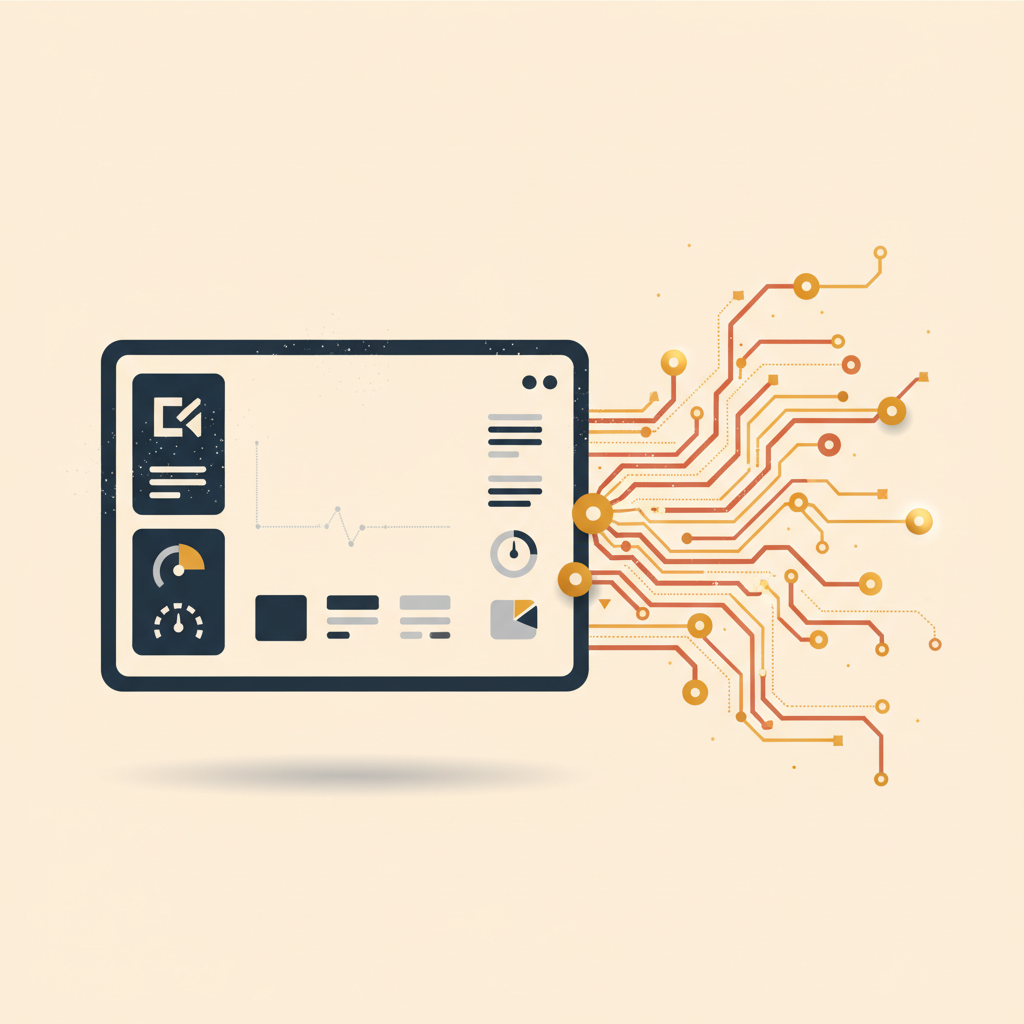
You invested in a client portal. Maybe it was SuiteDash, HoneyBook, or Dubsado. You were sold the dream of streamlined communication, centralized files, and happy, self-serving clients. Instead, you have a digital ghost town.
Clients forget their passwords and email you for files. Your team defaults to Slack and email for important updates because it's 'faster.' The portal has become an expensive, glorified folder for old invoices and the contract they signed six months ago.
Here’s the hard truth: The problem isn't your software. The problem is that you bought a tool but failed to build an operational system around it. A client portal isn't a feature you tack on. For it to deliver any value, it must become the non-negotiable central nervous system for your entire client experience.
Right now, you have a 'document dump.' We're going to show you how to build a 'client command center.'
Why Your Portal Became a Document Dump
A portal fails when it creates more work than it saves. This happens for a few predictable reasons.
First, you treated it as an optional add-on. You introduced it to clients with a casual, "Hey, we also have this portal you can use." You didn't make it the core of the relationship. When something is optional, your busy clients and team will always choose the path of least resistance—which is whatever they did before.
Second, your team isn't bought in. They see it as another box to check. If your internal project management happens in ClickUp, but client updates have to be manually copied into the portal, you've just doubled their workload. Of course they're going to avoid it. They are trying to be efficient, and your broken system is forcing them to be inefficient.
Finally, the portal isn't integrated into your actual workflow. It exists on an island. It doesn't connect to your tasks, your billing, or your team's daily work. It's just a place to store things, making it no more useful than a shared Dropbox folder.
The Fix: Building a Client Command Center System
Transforming your portal from a wasteland to a command center requires a system. It's not about finding a magic feature; it's about strategic design, engineered adoption, and deep integration. This is the core of effective /operations.
Step 1: Design the Experience, Not Just the Dashboard
Stop thinking about what the portal can do. Start thinking about what your client needs to do. Map out the client journey and design the portal to serve them at each specific stage.
- Onboarding: The portal dashboard should have a clear, simple checklist. "1. Sign the contract. 2. Complete your intake form. 3. Upload brand assets. 4. Schedule your kickoff call." This gives them immediate, actionable tasks.
- Project In-Flight: The view should change once the project starts. They need to see project timelines, key milestones, pending approvals, and the latest files. Make it impossible for them to ask, "What's the status of X?"
- Finance: A dedicated section should show all past invoices, current balances, and a secure way to update payment methods. No more emailing your accountant for a copy of a May invoice.
- Offboarding: As a project wraps, the portal should provide a summary of work completed, a link to all final deliverables, and information on next steps or ongoing /marketing-support.
Designing this journey is a strategic project. It's the kind of foundational work we execute in our /systems-setup engagements.
Step 2: Engineer Adoption from Day One
You don't ask clients to use the portal. You require it. Adoption must be a non-negotiable part of your service agreement. This isn't about being difficult; it's about delivering a superior, organized experience.
Onboarding is your critical moment. During the kickoff call, share your screen and walk the client through their portal. Show them exactly where to find files, how to communicate with the team, and how to view project progress.
Set the expectation clearly: "All project-related communication and file sharing happens exclusively within your portal. We do this to ensure every detail is tracked in one place and nothing falls through the cracks."
Then, you must be relentless in enforcing it. When a client inevitably emails you a file, your team's standard response must be:
"Thanks for sending this. To ensure it's properly logged with the project files, could you please upload it directly to the 'Project Files' section in your portal? Here is the direct link. This helps our whole team stay in sync."
After one or two redirections, they will learn. Consistency is everything.
Step 3: Integrate with Your Internal Project Management
This is the secret to getting your team on board. The client portal cannot create double-entry. It must be the single source of truth for both the client and your team.
The goal is to connect the client-facing portal with your internal project management tool, like ClickUp. A task a client sees as "Approve Homepage Mockup" in their portal should be linked to your internal ClickUp task for the designer. When the designer posts the mockup and requests approval, it should automatically push that update and file to the client portal.
When the client clicks "Approve," that status should flow back and update the task in ClickUp, triggering the next step in your internal workflow. This eliminates the manual overhead of your project manager having to copy and paste updates.
This level of integration is what separates amateur operations from a professional firm. It's the difference between fighting your systems and having your systems work for you.
Step 4: Choose a Tool Built for Deep Integration
Not all client portal platforms are created equal. Many are simple CRMs with a portal feature bolted on. To build a true command center, you need a platform architected for unification.
This is why we are certified /suitedash experts. It was built from the ground up to be this exact type of integrated system.
Here’s a look at the landscape:
| Platform | Best For | Portal Capability | Integration Weakness | |---|---|---|---| | HoneyBook/Dubsado | Solopreneurs & Freelancers | Simple proposals, invoices, and forms. | Portal is a container, not an integrated workspace. Limited customization and automation. | | GoHighLevel | Marketing Agencies | Powerful marketing and sales automation. | Project management and client experience tools are less mature for complex service delivery. | | SuiteDash | System-Driven Businesses | A truly unified platform. Combines CRM, projects, billing, files, LMS, and more. | Can have a steeper learning curve precisely because it's so powerful and customizable. |
Tools like HoneyBook and Dubsado are excellent for managing the inquiry-to-invoice workflow for simpler services. But their portals often remain document dumps because they lack the deep, customizable project management and automation capabilities.
SuiteDash, on the other hand, allows you to build the exact client journey you designed in Step 1. You can create custom dashboards for different client types, trigger complex automations, and manage projects in a way that truly syncs with your internal processes. It’s built to be the central nervous system.
Your Portal Is a Reflection of Your Operations
A ghost town portal is a symptom of chaotic, ad-hoc operations. It signals to your clients that your internal processes are likely just as disorganized. It undermines the premium value you claim to provide.
A well-oiled, high-value client command center does the opposite. It builds immense trust. It shows clients you are organized, professional, and in control. It saves them time, reduces their anxiety, and makes them feel cared for.
Scaling a service business past the $5M mark is impossible on a foundation of email chains and messy Dropbox folders. You need scalable systems. As an /atlanta-fractional-coo, this is one of the first systems we fix to unlock growth.
A client portal shouldn't be another task on your to-do list—it should be the system that clears your to-do list. If you're tired of paying for a tool nobody uses and are ready to stop wrangling emails and start delivering a seamless client experience, let's talk. We build the operational backbone that makes your tools actually work.
client portal · systems · operations · suitedash · client experience