
Driving System Adoption: Why Your Team Ignores Your SOPs
You built the perfect system in SuiteDash or ClickUp, but your team won't use it. Low system adoption isn't their failure—it's yours. Here's how to fix it.
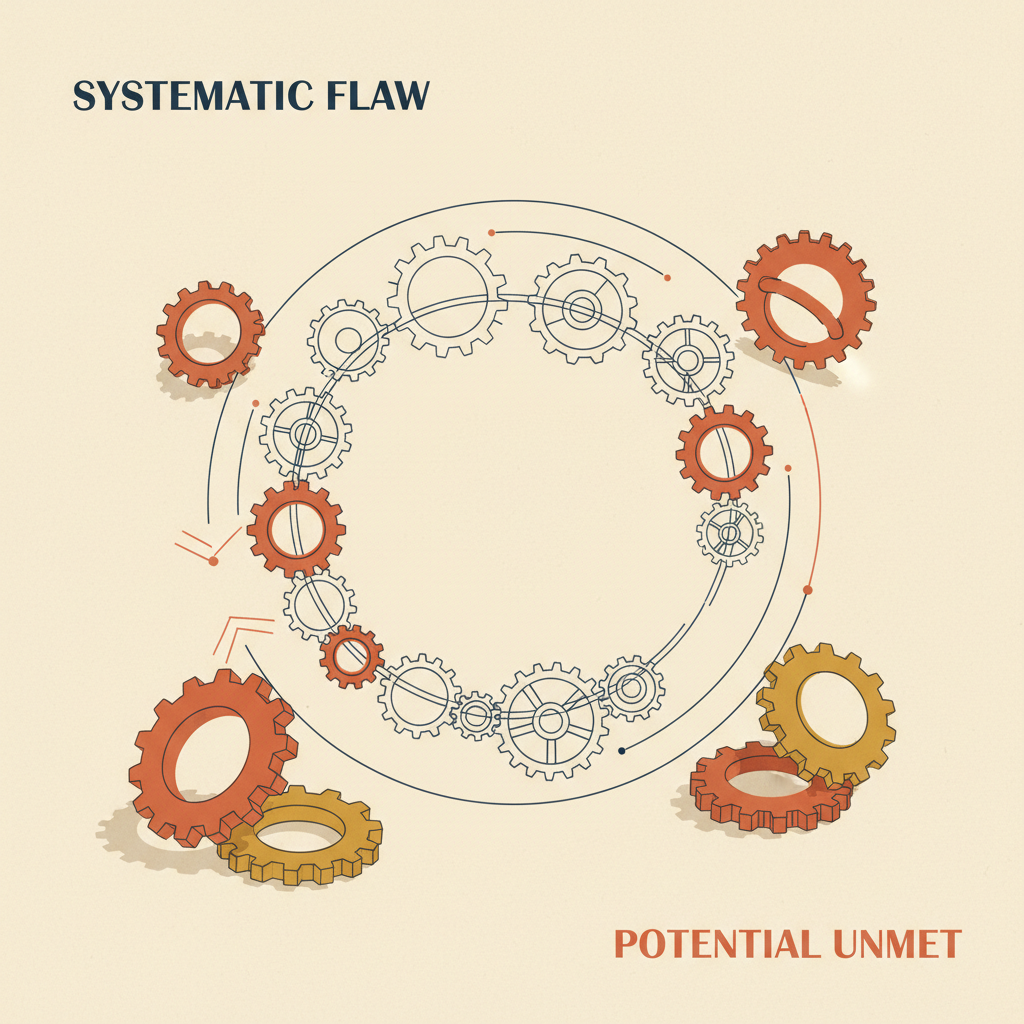
You spent a five-figure sum on a custom SuiteDash setup. You mapped out every project stage in ClickUp. You invested weeks into a perfect [/systems-setup]. And yet, your team still DMs you for client contact info, manages projects in rogue spreadsheets, and asks questions that the system was explicitly designed to answer.
Your first instinct is to blame them. They’re lazy. They’re resistant to change. They just don’t “get it.”
This is the wrong conclusion. Low system adoption is not a team failure; it is an operational leadership failure. If your team constantly bypasses the processes you built, it’s a direct reflection on your ability to deploy and champion those systems. The problem isn’t them. It’s you.
The Real Reason Your Systems Fail: It's You, Not Them
Blaming your team is easy. Taking responsibility is hard. Founders running $500k–$5M service businesses are often brilliant at their craft but inexperienced at managing internal [/operations]. You see a problem, buy a tool like SuiteDash or GoHighLevel, build a workflow, and expect everyone to fall in line.
Business doesn't work that way. A system is more than software; it’s a social contract. When that contract is broken, it's because the terms were unclear, the benefits weren't communicated, or the person who wrote the contract violates it daily.
Before you schedule another mandatory training session that no one wants, you need to diagnose the root cause. This isn’t about finding someone to blame. It’s about identifying the cracks in your leadership so you can finally get the ROI you expected from your systems.
The System Adoption Diagnostic: A Checklist for Founders
Run through this checklist honestly. The answers will reveal precisely where your rollout went wrong.
Is the 'Why' Missing?
Did you explain why the new system exists beyond platitudes like “efficiency” or “organization”? Your team doesn’t care about your abstract business goals. They care about how this change impacts their daily work.
A weak 'why': “We're using SuiteDash's client portals to be more professional.”
A strong 'why': “We are moving all client communication and file sharing to the SuiteDash portal. This will eliminate the 20+ email chains per project, stop version control issues with creative assets, and ensure you never have to hunt for feedback again. This change will save you an estimated three hours per week.”
Connect the system to their pain points. If you can’t articulate how the new ClickUp dashboard makes their job less frustrating, they have zero incentive to use it. They will stick with the devil they know—even if it’s a chaotic mess of emails and Slack messages.
Was the Training a One-and-Done Webinar?
If your entire training plan was a single 60-minute Zoom call recorded two months ago, you have failed. Training is not a singular event. It's an ongoing process of support and resource delivery.
People don’t absorb complex workflows in one sitting. They need information at the moment of need. When a project manager is trying to convert a deal in your CRM and can't remember the trigger for the onboarding automation, they aren't going to scrub through an hour-long video. They're going to do it manually and break your process.
Effective training is a library, not a lecture.
Is There a Feedback Loop?
You built the system from your 30,000-foot founder view. Your team operates it from the ground floor. They see the bugs, the bottlenecks, and the awkward workarounds you never anticipated.
If you haven’t created a clear, frictionless channel for them to provide feedback, two things will happen:
- They will assume the system is rigid and unimprovable.
- They will create their own unsanctioned workarounds, silently destroying your process integrity.
Without a feedback mechanism—a dedicated Slack channel, a ClickUp form, a recurring agenda item in team meetings—you are signaling that their frontline experience is irrelevant. Resentment builds, and adoption dies.
Are You the Worst Offender?
This is the most critical question. Be brutally honest. Do you live by the rules you created?
- When a team member asks for a status update in Slack, do you answer them there, or do you reply with a link to the relevant ClickUp task and say, “All updates are tracked here”?
- When a client emails you files directly, do you accept them, or do you gently redirect them to the SuiteDash portal you mandated?
- When you have a new idea for a client, do you text your account manager, or do you create a task and assign it through the proper channels?
Every time you bypass your own system, you send a clear message: the rules are optional. If the founder doesn't respect the process, why should anyone else? You are the standard. Your actions, not your words, dictate the operational culture.
From Builder to Shepherd: A Playbook for Lasting Adoption
Diagnosing the problem is the first step. Now you have to fix it. This requires shifting your role from 'system builder' to 'system shepherd'—a guide who nurtures, refines, and consistently upholds the process.
1. Relaunch with Purpose
Admit the initial rollout was insufficient. Call a meeting and relaunch the system. This time, lead with the powerful 'why' you defined earlier. Acknowledge the team's feedback (or lack thereof) and present your new plan. Humility here goes a long way. This isn't just about project management; it's about rebuilding trust in your operational leadership.
2. Implement Layered, On-Demand Training
Stop thinking about training as a single event. Build a sustainable resource hub. Your team should be able to find an answer to any process question in under 60 seconds. A good training system is the difference between frustrated compliance and enthusiastic adoption.
| Poor Training (The "One-and-Done") | Good Training (The "System Shepherd") | | :--- | :--- | | A single 60-minute Zoom call. | A library of short, task-specific Loom videos. | | No written SOPs or documentation. | A searchable knowledge base (built in [/suitedash]!). | | Assumes everyone learns the same way. | Live weekly "office hours" for Q&A and support. | | Ends after the initial launch meeting. | Is a mandatory part of every new employee's onboarding. |
3. Make Feedback Visible and Actionable
Create a formal process for submitting system improvement ideas. A simple form in your project management tool works perfectly. The crucial part is acting on the feedback and communicating the results.
Post updates in your company-wide channel: “Thanks to Jane's suggestion, we've added an automation to the proposal stage in GoHighLevel. This now alerts the [/marketing-support] team to prepare case studies automatically, saving about 20 minutes per proposal.”
This transforms your team from passive users into active co-owners of the company's operating system. They start looking for ways to improve efficiency because they know their voice is heard.
4. Lead by Example and Enforce with Grace
This is where you earn your title as 'system shepherd.' You must hold the line, especially with yourself.
When a request comes outside the system, don't just complete the task. Use it as a coaching moment. Respond with, “Got it. Can you pop this request into ClickUp so we can track it properly? Here’s the link to the project.” It might feel annoying at first, but this consistent redirection is the only way to rewire old habits—yours and your team's.
This firm-but-fair enforcement is non-negotiable for scaling. Clients like HoneyBook and Dubsado are great for solopreneurs, but scaling a multi-person team requires disciplined adherence to a central source of truth, like SuiteDash.
The Payoff: An Operation That Runs Itself
Driving internal system adoption is about more than getting your team to click the right buttons. It’s about building a business that can run, grow, and scale without you being the central hub for every decision and piece of information.
When your systems are adopted, you get reliable data. Projects run on time. Client experience improves. Your team feels empowered, not micromanaged. And you, the founder, are finally freed up to do the one thing you’re supposed to do: lead the business forward.
Fixing deep-seated process issues is tough when you're also managing clients, sales, and strategy. If you're tired of being the bottleneck and need an expert to help build—and more importantly, shepherd—the systems that will actually scale your business, we should talk. As an [/atlanta-fractional-coo] and certified SuiteDash Sensei, our team lives and breathes this stuff. We build the operational backbone that lets founders get back to being visionaries. Find out how we can help.
Ready to build an operation that scales? Let's discuss your business.
systems · operations · process adoption · leadership · SuiteDash